Economising Culture
Price: $15.00
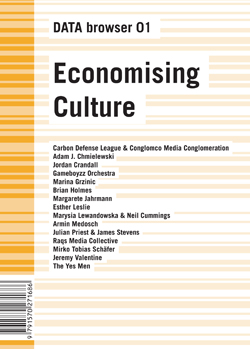
Economising Culture
Data Browser 01
On the (Digital) Culture Industry
Geoff Cox, Joasia Krysa & Anya LewinThe interaction between culture and economy was famously explored by Theodor Adorno and Max Horkheimer by the term ‘Kulturindustrie’ (The Culture Industry) to describe the production of mass culture and power relations between capitalist producers and mass consumers. Their account is a bleak one, but one that appears to hold continuing relevance, despite being written in 1944. Today, the pervasiveness of network technologies has contributed to the further erosion of the rigid boundaries between high art, mass culture and the economy, resulting in new kinds of cultural production charged with contradictions. On the one hand, the culture industry appears to allow for resistant strategies using digital technologies, but on the other it operates in the service of capital in ever more complex ways. This publication, the fi rst in the DATA browser series, uses the concept of the culture industry as a point of departure,...
Read more about: Economising Culture »Engineering Culture
Price: $15.95
Engineering Culture
Data Browser 02
Edited by Geoff Cox & Joasia KrysaSocial change does not simply result from resistance to the existing set of conditions but from adapting and transforming the technical apparatus itself. Walter Benjamin in his essay “The Author as Producer” (written in 1934) recommends that the ‘cultural producer’ intervene in the production process, in order to transform the apparatus in the manner of an engineer. This collection of essays and examples of contemporary cultural practices (the second in the DATA browser series) asks if this general line of thinking retains relevance for cultural production at this point in time – when activities of production, consumption and circulation operate through complex global networks served by information technologies. In the 1930s, under particular conditions and against the backdrop of fascism, a certain political optimism made social change seem more possible.1 Can this optimism be maintained when technology operates in the service of capital in ever more insidious ways?CONTENTSINTRODUCTION TO ‘THE AUTHOR AS (DIGITAL) PRODUCER’...
Read more about: Engineering Culture »Elephant & Castle
Price: $14.95
Elephant & Castle
A Novel
Matthew FullerThe Elephant & Castle is a concrete monster, the last area of central London to withstand “regeneration.” When the world is rebuilt, what could possibly go wrong? Everything! Elephant & Castle is by turns obscene, criminal, poetic and hilarious. Deliriously bleak humor, told in the language of folk tales, computer viruses, and an administrative jargon gone—finally and definitively—mad.
6″x9″
... Read more about: Elephant & Castle »
160 pp.Communization and Its Discontents
Price: $18.00
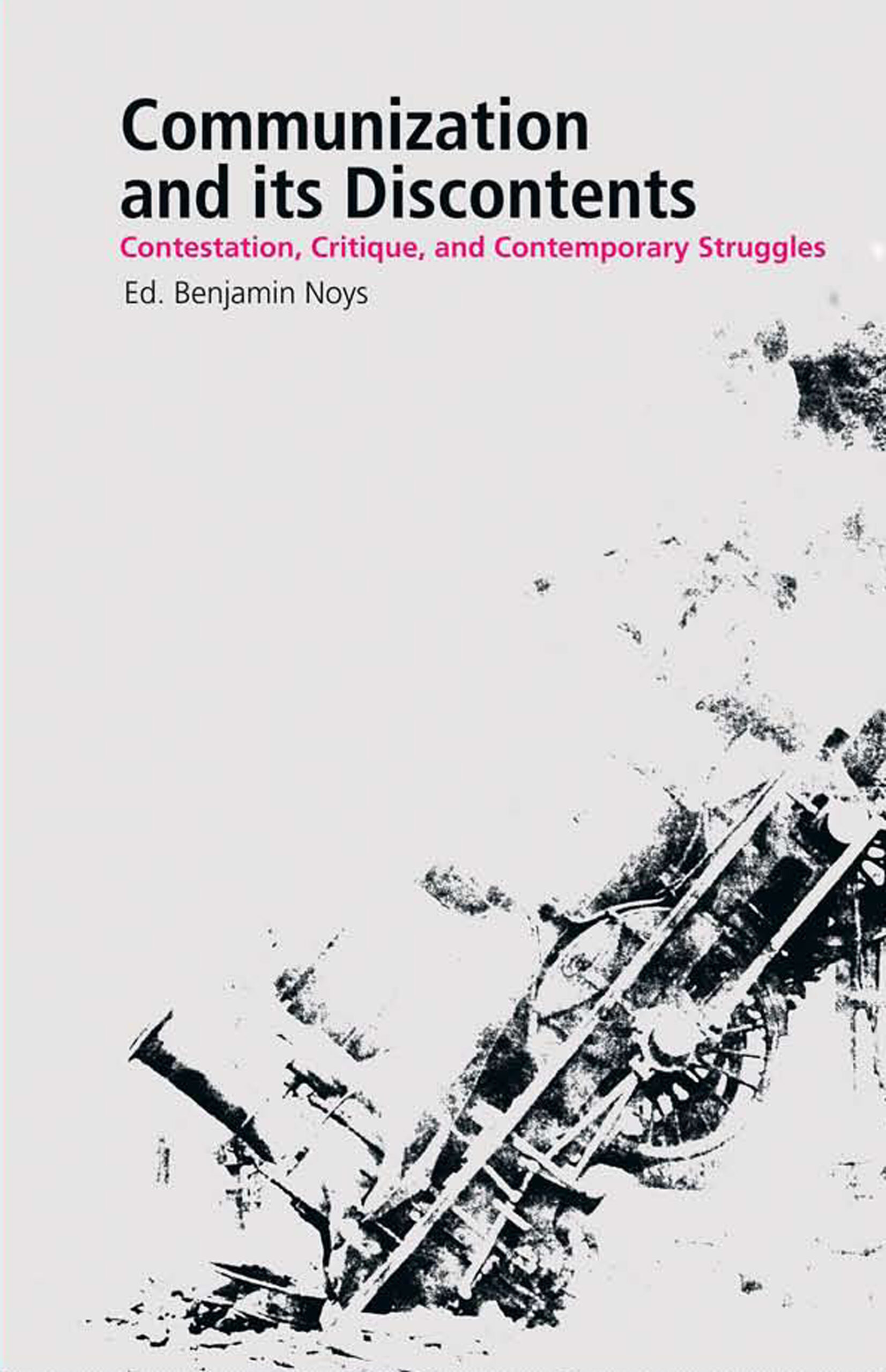
Communization and Its Discontents
Contestation, Critique, and Contemporary Struggles
Edited by Benjamin NoysCan we find alternatives to the failed radical projects of the twentieth-century? What are the possible forms of struggle today? How do we fight back against the misery of our crisis-ridden present? “Communization” is the spectre of the immediate struggle to abolish capitalism and the state, which haunts Europe, Southern California, and wherever the real abstractions of value that shape our lives are contested. Evolving on the terrain of capitalism new practices of the “human strike,” autonomous communes, occupation, and insurrection have attacked the alienations of our times. These signs of resistance are scattered and have yet to coalesce, and their future is deliberately precarious and insecure. Bringing together voices from inside and outside of these currents Communization and Its Discontents treats Communization as a problem to be explored rather than a solution. Taking in the new theorisations of Communization proposed by Tiqqun and The Invisible Committee,...
Read more about: Communization and Its Discontents »Revolutions in Reverse
Price: $18.00
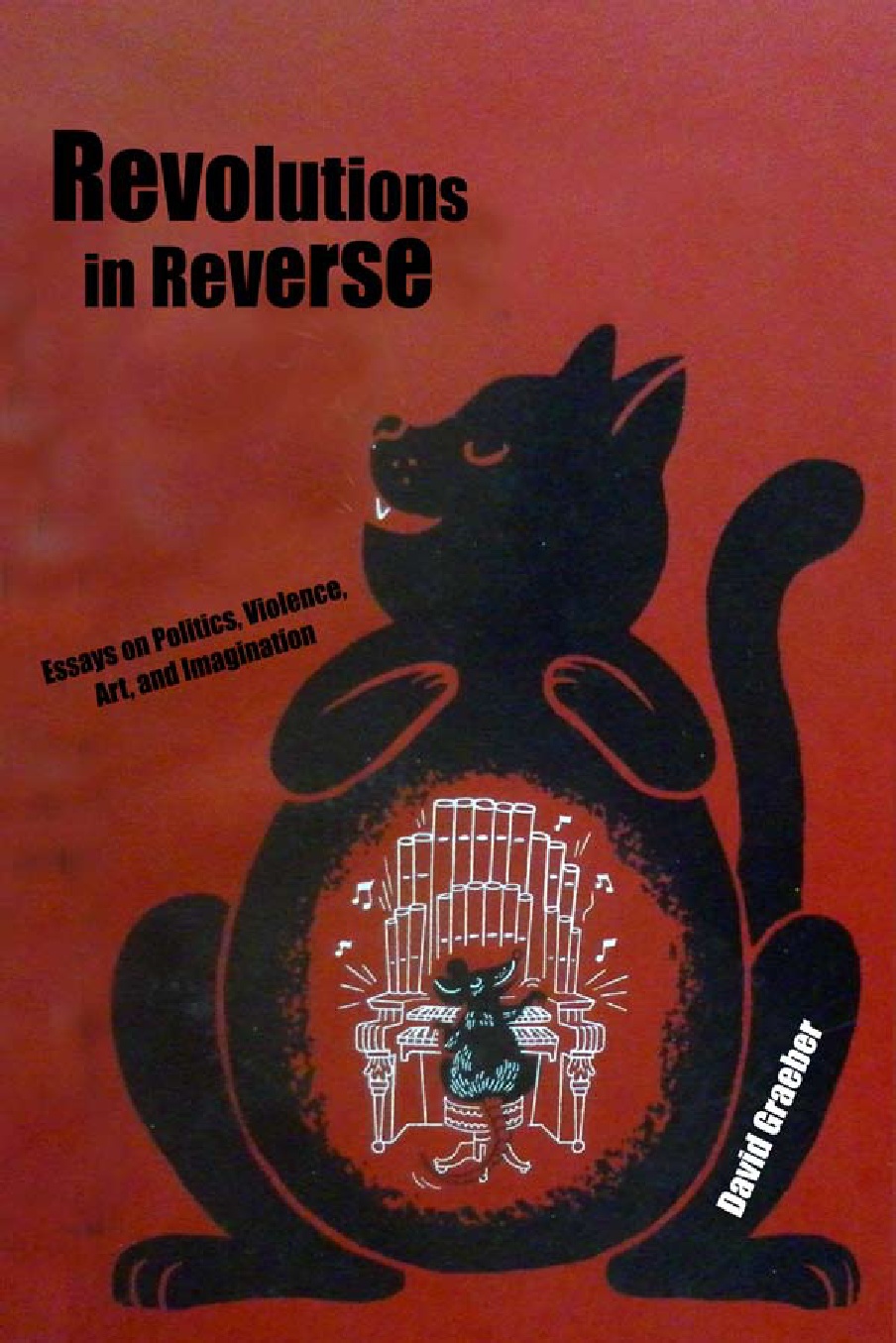
Revolutions in Reverse
Essays on Politics, Violence, Art, and Imagination
David GraeberCapitalism as we know it appears to be coming apart. But as financial institutions stagger and crumble, there is no obvious alternative. There is good reason to believe that, in a generation or so, capitalism will no longer exist: for the simple reason that it’s impossible to maintain an engine of perpetual growth forever on a finite planet. Yet faced with this prospect, the knee-jerk reaction is often to cling to what exists because they simply can’t imagine an alternative that wouldn’t be even more oppressive and destructive. The political imagination seems to have reached an impasse. Or has it?
In this collection of essays David Graeber explores a wide-ranging set of topics including political strategy, global trade, debt, imagination, violence, aesthetics, alienation, and creativity. Written in the wake of the anti-globalization movement and the rise of the war on terror, these essays survey the political landscape for signs of hope in unexpected places....
Read more about: Revolutions in Reverse »Spectacular Capitalism
Price: $18.00
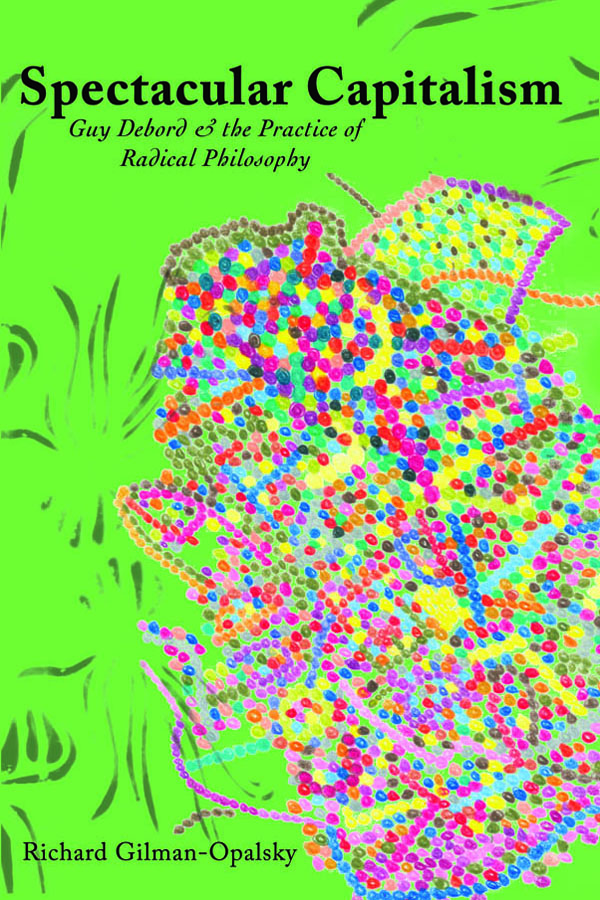
Spectacular Capitalism: Guy Debord and the Practice of Radical Philosophy
Richard Gilman-OpalskyDespite recent crises in the financial system, uprisings in Greece, France, Tunisia, and Bolivia, worldwide decline of faith in neoliberal trade policies, deepening ecological catastrophes, and global deficits of realized democracy, we still live in an era of “spectacular capitalism.” But what is “spectacular capitalism?” Spectacular capitalism is the dominant mythology of capitalism that disguises its internal logic and denies the macroeconomic reality of the actually existing capitalist world. Taking on this elusive mythology, and those who too easily accept it, Richard Gilman-Opalsky exposes the manipulative and self-serving narrative of spectacular capitalism.
Drawing on the work of Guy Debord, Gilman-Opalsky argues that the theory of practice and practice of theory are superseded by upheavals that do the work of philosophy. One could ask: Who better raises questions about public and private spheres of influence and control, Jürgen Habermas or the water war activists who made a rebellion in Cochabamba,...
Read more about: Spectacular Capitalism »